
Among the Sensex firms, Larsen & Toubro, UltraTech Cement, JSW Steel, Titan, Bajaj Finance, Wipro, Tech Mahindra and Nestle were the major laggards. Maruti, Power Grid, Axis Bank, State Bank of India, NTPC, HDFC Bank, ITC and IndusInd Bank were the gainers.

We asked colleagues, present and past, to reflect on a man who has made such a difference to their lives and careers. Here it is then, a rich collection of memories that offer enchanting glimpses of the enigmatic Ajit Balakrishnan.

India and the US on Thursday said they are looking forward to the reconvening of the India-US Trade Policy Forum later this year to further enhance trade relationship and identify new areas for engagement.
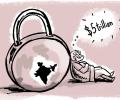
India will become the world's third largest economy by 2026 as its GDP in current dollar terms will reach $5 trillion in that year and further rise to $5.5 trillion in 2027, former Niti Aayog vice chairman Arvind Panagariya said on Friday. Delivering the 18th C D Deshmukh Memorial Lecture titled 'India at 125: Reclaiming the Lost Glory and Returning the Global Economy to the Old Normal', he said it is unlikely that GDP in current dollar terms of either Germany or Japan will cross $5 trillion-mark in the coming three years. Japan will have to sustain a growth rate of 3.5 per cent in current dollar terms to reach $5.03 trillion in 2027 from its 2022 level of $4.2 trillion, he said.

'India's emergence as a top crypto market comes despite a regulatory and tax environment that can be challenging for the industry to navigate.'
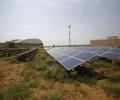
Billionaire Gautam Adani's Group on Wednesday announced the acquisition of SoftBank Group Corp's renewable power business in India for a deal value of $3.5 billion (approximately Rs 25,500 crore), to become the world's largest solar company. In a statement, Adani Green Energy Ltd, the renewable energy unit of the port-to-energy conglomerate, said it has inked share purchase agreements to buy 100 per cent of SB Energy India from SoftBank and Bharti Group. Without giving deal details, the statement said the transaction values SB Energy India at an enterprise valuation of approximately $3.5 billion, it stated. The transaction marks the largest acquisition in the renewable energy sector in India.

Tech Mahindra was the top loser in the Sensex pack, crashing over 9 per cent, followed by Kotak Bank, Axis Bank, TCS, Infosys and HUL. On the other hand, Hero MotoCorp, Bajaj Auto, Bajaj Finance and Titan were the gainers.
